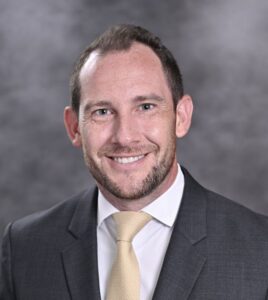
by Dr. Jared Cooper, Neurosurgery, Neuro-Endovascular Surgery, White Plains Hospital
White Plains Hospital neurosurgeon Dr. Jared Cooper encourages everyone to know the warning signs of stroke and that rapid treatment can save lives.
“As a neurosurgeon, I care for patients in some of the most critical moments of their lives. Stroke is often sudden and life-altering—not just for patients, but for their families as well. What stays with me most is seeing patients on the other side of recovery—returning to their families, their routines, and their lives.” – Dr. Cooper
BE FAST
Stroke can happen suddenly—and when it does, every second counts.
One of the most important things is that people know how to recognize a stroke quickly. We use a simple acronym — BE FAST — to help identify the warning signs.
B = Balance. Has the person experienced a sudden loss of balance, staggering gait, or severe vertigo? E = Eyes. Is the person having trouble seeing clearly from one or both eyes? F = Face drooping. Is one side of the person’s face drooping? Or is their smile uneven? A = Arm weakness. Is one arm experiencing weakness or numbness? If both arms are raised, does one droop down? S = Speech difficulty. If the person is asked to repeat a simple phrase, can they repeat it back? Is it slurred or hard to understand? T = Time to call 9-1-1. If any of these signs are present, dial 9-1-1 immediately and note when the symptoms first appeared.
The “T” is the most critical part. If you notice any of these symptoms in yourself or someone else, call 911 immediately. Don’t wait to see if it gets better.
Why Time Matters
In stroke care, we often say “time is brain.” That’s because nearly two million brain cells die per minute when blood flow is disrupted. This is why emergency care is so important.
There are treatments available that can restore blood flow and minimize damage—but they are highly time-sensitive. Some medications must be given within a few hours of symptom onset, and procedures like thrombectomy are most effective within a limited window. Acting quickly can mean the difference between recovery and long-term disability.
What You Can Do to Prevent Stroke
The good news is that many stroke risk factors are manageable. I often talk to patients about focusing on what we call “modifiable risk factors” — the things patients can work on to help prevent stroke.
They include:
· Controlling blood pressure
· Managing diabetes and blood sugar
· Monitoring cholesterol
· Eating a healthy diet and exercising regularly
· Getting quality sleep
· Avoiding smoking and limiting alcohol
Understanding the Types of Stroke
There are two main types of stroke. The most common—accounting for about 90% of cases—is ischemic stroke, which occurs when a blood clot blocks blood flow to the brain. The second type, hemorrhagic stroke, happens when a blood vessel ruptures and causes bleeding in the brain.
Both are serious, and both require immediate medical attention.
Learn the signs. Trust your instincts. And if something feels wrong, don’t wait.
Advanced Stroke Care, Close to Home
In April, the Joint Commission recently certified White Plains Hospital as a Comprehensive Stroke Center (CSC), recognizing the Hospital’s ability to provide the highest level of advanced stroke care — from emergency treatment through recovery and rehabilitation. Learn more about White Plains Hospital’s stroke care services.
Dr. Jared Cooper is a neurosurgeon at White Plains Hospital, seeing patients at 122 Maple Avenue in White Plains and at 2 Crosfield Avenue in West Nyack. To make an appointment, call 914-849-7593.
This story originally appeared on Health Matters, a White Plains Hospital publication.